
Practical
Freshness and Vase Life: What Actually Matters
Vase life is decided long before the flower reaches a vase. Four factors explain almost all of it.
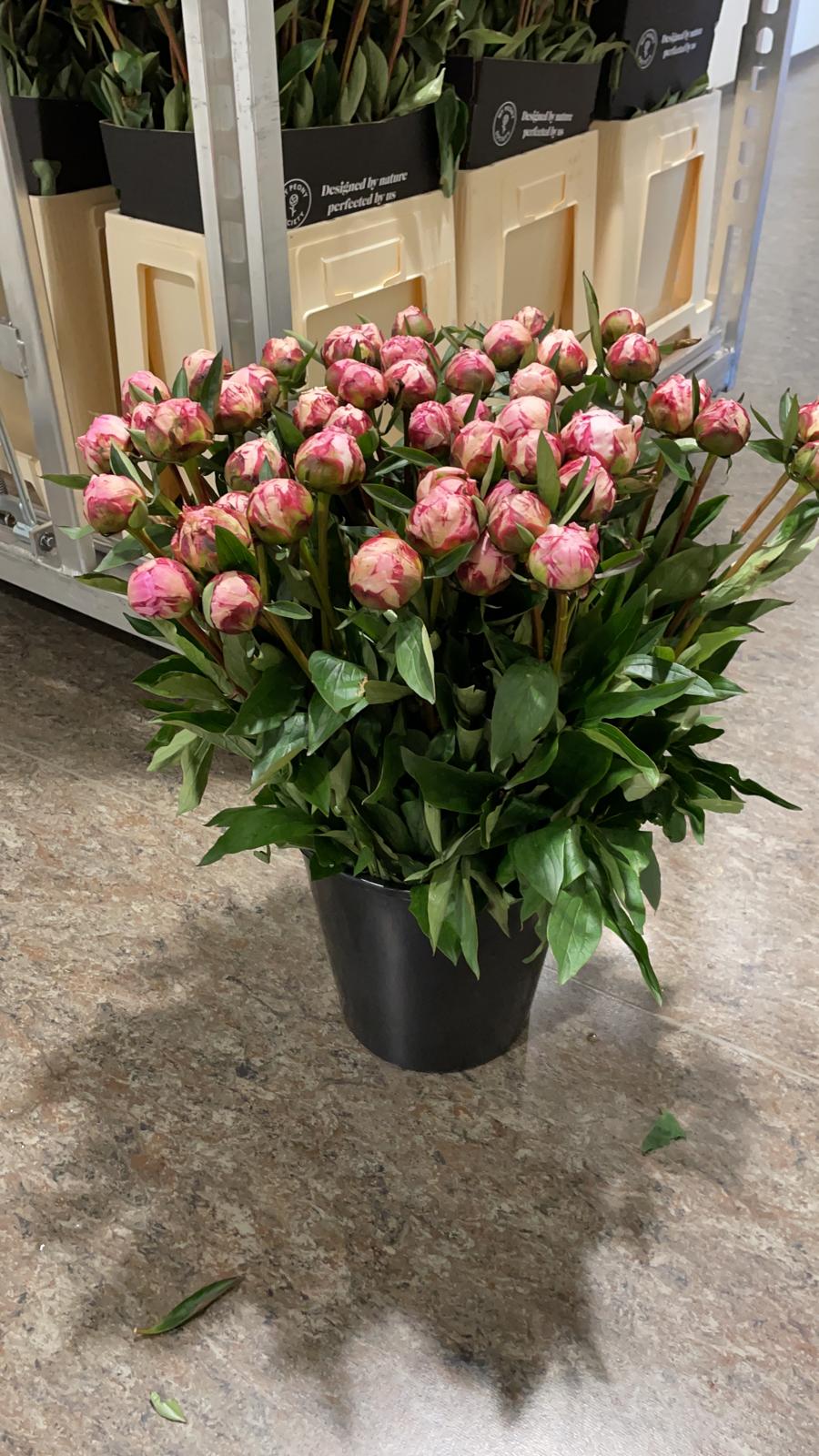
1. Harvest stage
Flowers are cut at a defined ripeness stage — roses at a specific bud stage, peonies at the soft-marshmallow stage, lilies with colour just showing. Cut too early they never open; cut too late they arrive spent. Grower discipline here is a large part of what you pay for at trade level.
2. Cold chain
Every hour a flower spends warm consumes vase life. An unbroken cold chain from greenhouse to your cooler is worth more than any additive.
3. Time in transit
Buying in the Netherlands and flying within a day or two means your flowers skip the days they would otherwise spend moving through intermediate traders.
4. What you do on arrival
Handling in your own shop can add or destroy several days of vase life.
- Unpack immediately — never leave closed boxes in a warm room
- Cut 2–3 cm off each stem at an angle with a clean sharp knife
- Use clean buckets and fresh water with flower food
- Strip leaves below the waterline to stop bacteria
- Keep flowers away from direct sun, AC draughts and ripening fruit
The ethylene trap
Ripening fruit releases ethylene gas, which makes many flowers — especially carnations, lilies and delphinium — drop petals early. Never store flowers near fruit, and keep the cooler clean.
Web-Flora supplies florists, wedding and event professionals, hotels and premium retailers in Saudi Arabia with fresh Dutch flowers. Minimum order is 2 boxes (around €600), shipments leave the Netherlands weekly, and Ahmed Frindi is your direct personal contact.
Frequently asked questions
- How long do Dutch roses last?
- Well-handled Dutch roses commonly give 7–12 days of vase life, depending on variety and room temperature.
- Should I use flower food?
- Yes. Flower food supplies sugar and limits bacteria, and it measurably extends vase life.